
Pain and suffering. Ah yes, everyone's two favorite words. These two words have affected pretty much every single topic we have covered in EAS 314. However, these words have changed in meaning from text to text and whether they were seen in a negative or positive light have also been relative. I hope to examine, if only briefly, how people have dealt with pain and suffering in the texts and course material we have already seen, and perhaps we can attain a better understanding of what it means to experience pain and suffering, and in doing so, we may even have our eyes just a little more widened to the human condition that is common to all of us.
For the sake of convenience, I'd like to start with material we learned from the beginning of the course to the end. I am sure everybody still remembers the film that Mizenko Sensei showed us about the effects of the atomic bombs that were dropped on Japan during World War 2, White Light Black Rain [9]. We had just come back to start off the new spring semester and the first images we see in EAS 314 are pictures of badly mutilated men, women, and children, suffering from all kinds of injuries from some radiation burns and poisoning to entire bodies being completely scarred to missing limbs. The film was sobering to say the least. It showed us in great detail about the real effects of the atomic bombs that were dropped on Japan. It's sad to have seen so many images of the mushroom cloud that those fateful bombs made over Japan, yet many of us are not shown what the bomb had done to the people. Now, it is not the point of this blossay to talk about whether the atomic bombs were necessary or not to end the war, but I am sure there is no doubt in anyone's mind that the bombs have certainly created pain and suffering in the rawest of form. The images have given us the physical aspect of this topic in terrifying detail. People's hands bent and fingers melted together, lips still swollen from burns and corrective surgery, the images were, in the most modest of terms, shocking. Many years later, victims of the bombs still had half of their backs missing with ribs showing underneath thin layers of skin. The amount of physical pain and suffering is immeasurable. Somehow, these people have survived and lived their lives as fulfilling as they could, which can only be a testament to strength of their character.
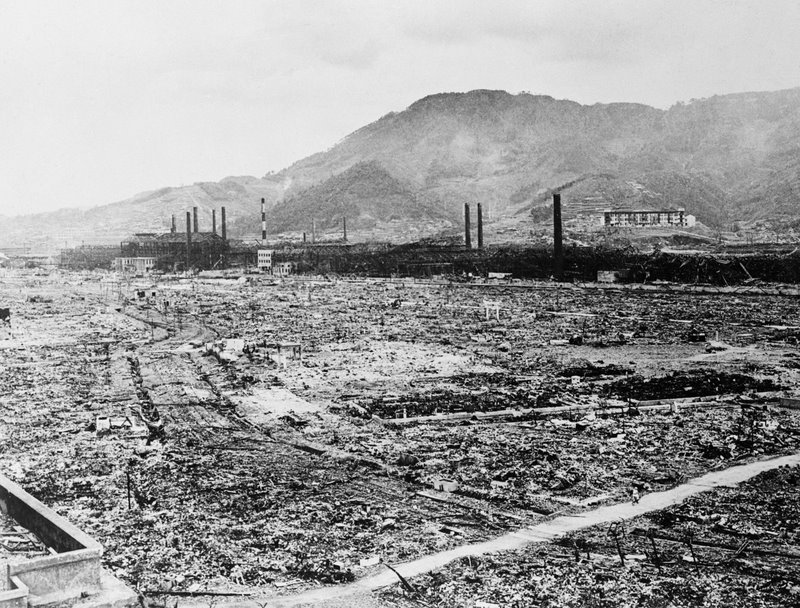
More scarring and permanent than any physical injury was the emotional and psychological devastation that the atomic bombs caused. Honestly, have you ever tried to imagine a scenario in which without warning, your entire family and home along with the surround area in huge radius was wiped out, destroyed, burned to the ground? In Summer Flower, grotesque images entered my mind as I read lines such as "on the site of the classrooms lay the bones of the pupils." [7]. How can anybody ever get over that if it actually happened to them or witnessed all of this chaos? Well, the answer is they don't. Countless victims of the atomic bombs have grieved for their long lost family and friends even after decades had past. Sometimes, it seems like the suffering was so great that even if the person directly afflicted with the injury made peace with their condition, witnesses could not hold back their tears. In Fireflies, the author could not help but weep and sob as she stared at a girl whose face was grotesquely deformed from the atomic bombs [3].
Thinking back on all of these readings and the images that I saw watching White Light Black Rain, there is a certain place deep inside of my chest that weeps for our kind. Pain and suffering is a necessary part of life, just turn on the TV and watch a nature channel. Animals, plants, insects, bacteria, viruses, everything and anything alive causes pain and suffering, to survive and live. But, can we really make the same argument for the human species? Sure, you can argue that everything people fight about can be broken down into its most basic components, money representing a power structure, different affiliations representing different herds or groups you could say, but at the core of the issue, what is it that makes humans kill each other without mercy? Different religious beliefs, money, oil, different ethnic groups. Power. Nobody wants to suffer or experience pain, but everyone accepts the fact that we all do anyway and we let people who have power do it onto others whether we do it consciously or not.

Maybe it's because pain and suffering is personal and relative to the person experiencing it first hand. For example, one of the pilots that flew the bomber that dropped one of the atomic bombs over Japan spoke of having no ill feelings or guilt. I do not believe this man is cold hearted or immoral, but perhaps in his perspective, his pain and suffering originated when Japan bombed Pearl Harbor. So, he dealt with his own pain and suffering by causing it onto whom he believed put it unto him. With this type of mindset, we allow this cycle of suffering to move round and round. Just look at the story of Mononoke Hime. Without getting into whose side was more "right", this is a story that involves a cycle of pain and suffering. Humans damage mother nature and cause all of the animals to undergo great suffering, and so the animals decide to fight back by killing humans as well [5]. Both sides take physical and emotional tolls on each other but the cycle never seems to stop.
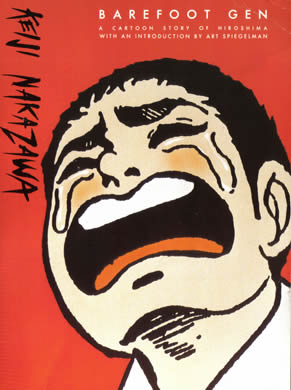
One interesting piece of work that I enjoyed reading was Barefoot Gen. Although the media used was that of a manga or comic, its message was nonetheless very clear. Gen and his family went through hardships of all kinds and at all times of the story. There was no break for them. If they were not being herded into bomb shelters during bombing raids, they were being harassed by their neighbors, starving from lack of food, or trying to help each other survive different circumstances. Their pain was my pain as I read the manga. When they suffered, I tried to feel the same way, in order to connect with their characters. When Gen's brother went off to join the military, and his father was standing by the train station crying and yelling celebratory shouts, I felt a distinct connection with the father's feelings [1]. Even if the story turned out to be a work of fiction, there was a very real emotional pain that was being used as the inspiration for the story. Gen's older brother had joined the military to ease the suffering of his family from being seen as traitors. Gen's father had treated his children harshly out of love and fear of them experiencing pain. How many of you guys have ever been in a situation where you felt helpless to aid your family? This type of pain hits close to home and it was no different reading Barefood Gen. When the atomic bomb was dropped in Gen's hometown in the manga, all of the emotional and psychological pain combined with their physical injuries that really made my heart ache for these characters, because I knew in the back of my mind, real human beings suffered real injuries and lost real family members many years ago in these types of situations.

The next piece of material that I want to bring up really impressed me with its subtlety and simplicity of filming style and language. If you guys read my last discussion board post, then you should already know that Tokyo Story was one of the most impressive course materials for me this semester. So far, on the topic of the atomic bombs and the aftermath in Japan, I feel that I really emphasized more of the physical pain and suffering experienced by the victims. No doubt there were psychological and emotional pain associated with the atomic bombs, however Tokyo Story focuses on a different type of psychological and emotional pain. Here's a quick recap: Tokyo Story is about an elderly husband and wife who decide to travel a long distance to Tokyo in order to take a trip together and visit their children. Out of this simple storyline came, in my opinion, some of the most subtle yet depressing scenes driven by amazing acting. When the parents first visited their children, I wasn't sure if they knew that their children were moving them around out of hassle and inconvenience. But, it was when the children decided to send them packing literally to a loud, obnoxious vacation spot, that the parents really showed what they felt and knew. During the whole film, they had been suffering from the thought of their children not having time for them anymore and treating them disrespectfully. But, as the husband and wife were sitting together outside of the vacation building staring off at the endless sea, they decided that it was time to go home [8]. But it was the look on their faces and the tone of their voices that expressed their sorrow of coming to the realization that their children were not same children that they raised. They dealt with this type of pain of coming to a realization by simply accepting it as it was. However, personally for me, this was one of the hardest scenes to watch without feeling a deep sadness within me. I've always felt that treating your parents with disrespect was one of the worst betrayals a child could make and I still feel that way. Throughout the whole movie, the suffering of the parents seemed so pure and subtle and I almost feel as if the mother dying at the end was due to the carrying of all this pain within her. I don't have any children yet but I can only imagine that your children treating you disrespectfully and having no time for you could only make you feel terrible. I was pissed off at their daughter in the movie the entire time.

I think it's important that we recognize that it's not only adults that have to deal with pain and suffering in everyday life. So far, I've only covered the experiences of adults but adolescents have their own unique pains to deal with. Many of the issues are things that we may have also dealt with in our own lives. After all, we have all been adolescents before not too long ago. In Cruel Story of Youth, the main characters, Kiyoshi and Makoto, pretty much ask for trouble as they steal from lustful men, get into fights with gangsters, and get into other dangerous scenarios. Kiyoshi and Makoto are both trying to deal with problems in their life, so acting out is one way of dealing with them. Makoto deals with her issues by allowing herself to be dominated by Kiyoshi repeatedly, (read dominated as raped), and stealing from lustful old men. Kiyoshi deals with his feeling of having no real motivation to do anything buy sleeping with random women, going around getting into fights, and eventually spending his time with Makoto stealing money [2]. What Kiyoshi and Makoto were really doing, as this happens in real life too frequently, is replace their psychological pain and suffering with physical pain and suffering.

Another example of this comes from Patriotism, both the story and the film. In Patriotism, a young soldier named Lieutenant Shinji Takeyama and his wife Reiko perform hara-kiri [6]. After a failed coup by Lieutenant Shinji and Reiko's friends, they experienced inner turmoil. Lieutenant Shinji was ordered to round up the failed coup members, his friends, and execute them. There is no doubt that they were experiencing great emotional and psychological pain. So, instead of executing their friends, both Lieutenant Shinji and his wife Reiko decided that they would rather perform a ritual suicide. They decided to replace their emotional pain and suffering with physical pain and suffering, eventually death in this case.

As I round up my discussion of how people have dealt with pain and suffering, I wanted to bring up one more important piece of work. I'm referring to Ghost in the Shell, one of the last films that we saw in the course. The futuristic story involves a woman named Major Motoko Kusanagi as a government cyborg assassin [4]. She has an interesting perspective compared to all of the other films and literature that we've read and seen during the course because as a cyborg, she does not have to worry about physical pain and suffering. However, it seems that as much as she lacked physical pain and suffering, she took that much more load as psychological and emotional suffering. Throughout the film, she was constantly trying to figure out who she was, whether she was still considered a human being or a piece of machinery, controlled by the government perhaps literally, things that would cause any person to despair over.
As I analyzed each work that I've discussed so far, I kept thinking to myself, which is worse? Is it better to experience physical pain and suffering or emotional and psychological pain and suffering? Usually, with one comes the other. However, in cases such as Ghost in the Shell, Motoko seemed to have equated experiencing physical pain to being more human. Since she did not really feel any type of physical pain, she kept questioning her humanity. Personally, I believe physical pain and suffering is easier to heal, but it is the psychological pain that takes many years to overcome. All living things must experience pain and suffering during their lifetime, and humans are no exception. Although some kinds can be and should be avoided, I feel that life would not be more beautiful and valuable to us without the pain and suffering that comes with it. Through our own experiences and ways of dealing with it, we learn who we are on a more intimate level and grow in character as a result of our new knowledge. I hope I opened my eyes to you readers at least a little bit and created a little bit more understanding of the complex relationship between humans and pain and suffering.
Sources used:
[1] Barefood Gen. Manga.
[2] Cruel Story of Youth. Film.
[3] Fireflies. Text.
[4] Ghost in the Shell. Film.
[5] Mononoke Hime. Film.
[6] Patriotism. Text/Film.
[7] Summer Flower. Text.
[8] Tokyo Story. Film.
[9] White Light Black Rain. Film.


